We use cookies to enhance your browsing experience, serve personalised content, and analyse our traffic. By clicking "Accept All" you accept this and consent that we share this information with third parties and that your data may be processed in the USA. For more information, please read our .
You can adjust your preferences at any time. If you deny, we will use only the essential cookies and unfortunately, you will not receive any personalized content.

The sudden and severe escalation of conflict across the Middle East this week has brought profound distress and instability to the region. Following recent military strikes and retaliatory attacks that have forced the closure of multiple airspaces.
The ripple effects are also being felt by hundreds of thousands of international passengers, leaving tens of thousands of British citizens stranded abroad or facing unprecedented travel chaos. With the Foreign, Commonwealth & Development Office (FCDO) urgently advising nationals in several affected Gulf states to shelter in place, and major UK airlines rapidly cancelling or rerouting flights to avoid the region, the situation is incredibly stressful for travellers.
Multiple Gulf states temporarily closed or restricted their airspace following recent regional security developments. In several cases, governments cited civil aviation safety precautions.
Affected areas include:
United Arab Emirates
Qatar
Bahrain
Kuwait
Iran
Israel
Iraq
Portions of Saudi Arabia
Flight tracking data shows major commercial corridors across the Gulf temporarily emptying out or being heavily rerouted.
Dubai and Abu Dhabi are seeing flight suspensions, while Doha and Bahrain are also experiencing disruptions. Even airports not directly struck are pausing or slowing operations as authorities assess broader airspace risk.
This is not a localised airport closure. It is a regional aviation event.
Updated FCDO Guidance and Airspace Restrictions:
The Foreign, Commonwealth & Development Office (FCDO) has significantly expanded its travel advice following escalating military action and security developments in the Middle East. With airspace restrictions and closures currently affecting major aviation hubs, the FCDO now advises against all but essential travel to the United Arab Emirates (UAE), Qatar, Bahrain, and Kuwait, and against all travel to Israel, Palestine, and Iran. British embassies are urging nationals currently in certain affected areas, such as the UAE, to shelter in place and register their presence with the UK government.
The impact of these closures is not limited to a single country. Because the Gulf region serves as a vital global aviation corridor for UK travellers heading to Asia, Africa, and Australasia, the disruptions are severely affecting international routes far beyond the immediate area. Major UK and international carriers, including British Airways, Virgin Atlantic, Emirates, and Qatar Airways, have cancelled or drastically rerouted flights, particularly out of London Heathrow and Gatwick to transit hubs like Dubai (DXB) and Doha (DOH).
Check the airline website directly to keep up to date with cancellations.
While tourism to unaffected neighbouring regions (such as Egypt, Cyprus, or Turkey) is not universally suspended, conditions are evolving rapidly. If your travel plans are impacted, here is what you need to understand regarding your protections as a UK consumer:
Flight Cancellations: Under UK Air Passenger Rights, if your flight departing from the UK (or arriving on a UK/EU carrier) is cancelled, your airline is legally required to offer you an alternative flight (re-routing) at the earliest opportunity, or a full refund. Because these disruptions are considered "extraordinary circumstances," you will likely not be entitled to additional fixed-sum compensation.
Duty of Care: If you are stranded abroad, your airline must provide reasonable meals, refreshments, and hotel accommodation while you wait for a replacement flight, regardless of the cause of the disruption.
Package Holidays: If you booked through a UK tour operator and the FCDO advises against travel to your destination, you are generally protected under the Package Travel Regulations. Your travel company must offer an alternative holiday if they can, or a refund for the full price of your package.
Travel Insurance: Be aware that standard travel insurance policies are typically invalidated if you choose to travel to a destination against FCDO advice.
Make sure to check the gov.uk website to keep up to date with latest travel advisory.

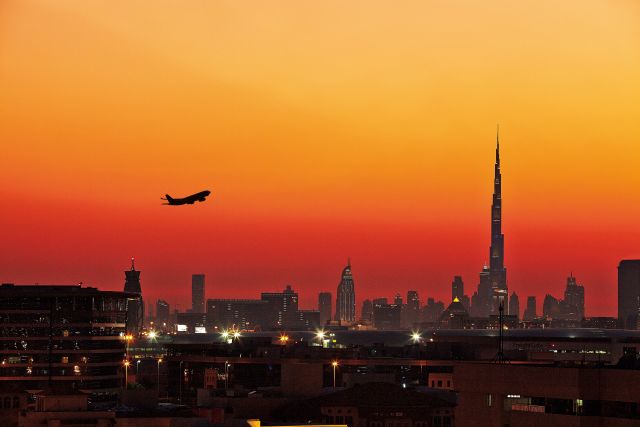
Dubai International Airport is one of the busiest global transit hubs, connecting Europe, North America, Africa, India, Southeast Asia, and Australia. When Gulf airspace closes, the impact extends far beyond the Middle East.
Travellers may experience:
Cancellations and grounding of aircraft
Rerouting of Europe–Asia long-haul flights
Extended flight durations
Missed connections
Aircraft and crew displacement
Even travelers not visiting the Middle East directly may see delays if their routes typically pass through Gulf corridors.
At this moment, mainstream holiday destinations in Turkey, Egypt, and Cyprus remain open, and flights from the UK to these countries are largely operating as normal. Because the violence and airspace closures are currently concentrated in the Gulf and the Levant (specifically affecting the UAE, Qatar, Bahrain, Kuwait, Israel, Lebanon, Iran, and Iraq), destinations slightly further west are not subject to the same strict travel bans.
However, it is important to say updated on changes to these destinations via the gov.uk website.
Here is the current reality for the most popular neighbouring destinations:
Destination Breakdown
Egypt: The Foreign, Commonwealth & Development Office (FCDO) has not advised against travel to Egypt’s main tourist hubs. Popular Red Sea resorts like Sharm el-Sheikh and Hurghada, as well as Cairo, Luxor, and Alexandria, remain safe to visit according to current guidance. UK flights to these areas are continuing to operate.
Turkey (Türkiye): FCDO advice for Turkey remains unchanged. Holiday resorts (such as Antalya, Bodrum, and Marmaris) are completely unaffected. While major Turkish airlines (like Turkish Airlines and Pegasus) have cancelled all of their onward flights into the Middle East, direct flights from the UK to Turkey are running as scheduled.
Cyprus: While there was a reported drone incident near the UK military base at RAF Akrotiri, the FCDO is not advising against travel to Cyprus. British holidaymakers are advised to follow local guidance, but commercial holidays and flights to the wider island are continuing as planned.
If you are traveling to or through the Middle East in the next several days:
Check your airline directly before departure
Monitor embassy advisories
Review refund and rebooking flexibility
Consider travel insurance coverage carefully
Build extra time into connecting itineraries
Many airlines are issuing flexibility waivers for affected routes. However, policies vary by carrier and ticket type. Because aircraft and crews may be repositioned after airspace restrictions, schedule adjustments can continue even after corridors reopen.
This remains a rapidly evolving aviation situation, and operational changes may occur with limited notice.