We use cookies to enhance your browsing experience, serve personalised content, and analyse our traffic. By clicking "Accept All" you accept this and consent that we share this information with third parties and that your data may be processed in the USA. For more information, please read our .
You can adjust your preferences at any time. If you deny, we will use only the essential cookies and unfortunately, you will not receive any personalized content.

I thought I had achieved peak career success when I started writing about travel for a living. Then I learnt that a tiny island in Wales is hiring people to live among puffins and count them at sunset. I regret everything. It turns out my real dream job is not in travel journalism, but on Skomer Island, wearing binoculars and emotionally bonding with seabirds.
In the summer of 2024, I somehow earned the nickname “The Puffin Lady” after a tweet about regretting not buying a puffin sweater in Iceland went wildly viral. A stranger (hello, Dave!) on the internet mailed me the exact sweater I had wanted, and I learned two things:
The internet is occasionally kind.
Puffins have a suspicious amount of power over my life.
I love puffins. Not casually. But deeply.
At my son’s choir concert this December, a person I had never met leaned over and whispered, “Excuse me… are you the Puffin Lady?” Yes. Yes, I am.
I have travelled to Bar Harbor to see puffins in one of the only places they nest in the United States. I have taken a tiny boat captained by a friendly Irishman named Pat to Skellig Michael, the dramatic rock island off Ireland’s coast famous for ancient monks and Star Wars, just to walk the narrow paths where they live, and I have chased them across the Westman Islands in Iceland. Long before this volunteer opportunity appeared, Skomer Island was already on my summer travel list, not as a casual trip but as something closer to a pilgrimage.
At this point, any responsible millennial has either a favorite sourdough starter, a preferred ceramic mug, or an intense interest in birds. I chose birds.
So when I read that Skomer is offering free housing, travel expenses, and a stipend in exchange for puffin counting, I felt something between joy and an existential crisis.
Skomer Island is a protected seabird reserve off the coast of Pembrokeshire in southwest Wales. The Wildlife Trust of South and West Wales is currently recruiting volunteers to help monitor wildlife and count puffins across spring, summer, and autumn.
Successful applicants will spend around three months living on the island as part of conservation efforts led by the Wildlife Trust of South and West Wales. Volunteers will help monitor seabird populations, assist with wildlife surveys, and support the daily running of the island.
The roles are unpaid, but volunteers receive:
Free accommodation on the island
Travel expenses within the UK
A monthly stipend of £200–£400
For bird lovers, this is less "job opportunity" and more "how is this a real thing."
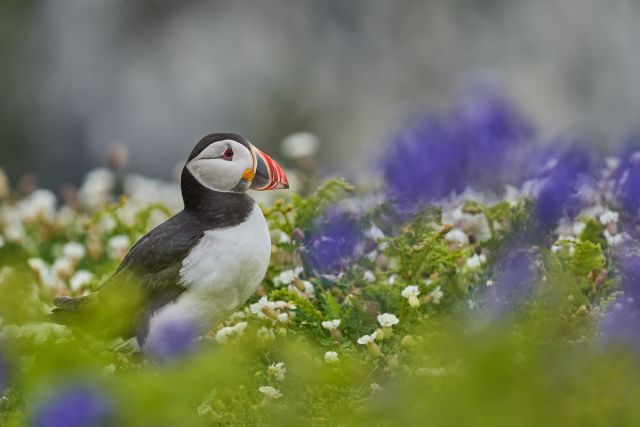
One of the main responsibilities is counting puffins, which happens just before sunset when more birds are on land. Volunteers divide the island into sections, pull out clickers, and count puffins on the cliffs, in the sea, and in the air.
This is not a metaphor. This is not a poetic description. This is literally a job where your main responsibility is standing on a cliff and clicking a button every time you see a puffin.
Skomer Island is home to tens of thousands of puffins. Last year, Skomer recorded more than 43,000 puffins (43,636 to be exact), a record number despite global populations declining. The island’s success is linked to abundant food and the absence of predators like rats and foxes, making it one of the most important puffin sites in the world.
Puffins are currently listed as vulnerable on the International Union for Conservation of Nature Red List, making monitoring efforts like those on Skomer particularly important.
The island also supports vast populations of other seabirds, including Manx shearwaters, guillemots, and razorbills, as well as grey seals and other wildlife.
And lucky volunteers will get to live there for free. If this were a fictional job description, I would assume it was written by someone who wanted to emotionally manipulate bird lovers.
The volunteer roles extend beyond puffin counting. Depending on the season, volunteers may also:
Monitor seabird populations
Track chick productivity
Assist with boat-based wildlife surveys
Observe grey seals and other species
Help manage daily island operations and visitors
Successful applicants will help welcome the island’s roughly 25,000 annual visitors and support daily operations on the nature reserve. Skomer Island is part of Wales’ only marine conservation zone, making it a key site for biodiversity and conservation research.
For volunteers, the experience offers rare access to one of the UK’s most important wildlife habitats.
The Wildlife Trust of South and West Wales is currently advertising three long term volunteer positions and a seabird monitoring role on Skomer Island. Volunteers typically work on the island between late March and late September, with specific roles depending on the season. Applications are competitive, and candidates are expected to have an interest in conservation, wildlife, and outdoor work.
For anyone who has ever dreamed of trading emails for binoculars, spreadsheets for seabirds, or city life for cliffs and ocean views, Skomer Island offers a rare and unusually charming opportunity.
And unfortunately, it has made the rest of us reconsider our careers. Perhaps they’ll let me come with my four kids and two cats, and I can just write from the island In the mornings and puffin count in the evenings? A girl can dream.
Not everyone can move to a windswept Welsh island to count seabirds at sunset. Tragic, I know. But you can support the work that keeps places like Skomer alive by donating to the Wildlife Trust of South and West Wales.
Puffins are currently listed as vulnerable to extinction, and conservation efforts on Skomer help protect their colonies and fragile island ecosystems. Even small donations matter: roughly £10-£30 supports wildlife monitoring, habitat protection, and seabird conservation.
If you’ve ever felt joy watching a puffin waddle, fly, or stare into your soul like a tiny Victorian philosopher, this is your moment.
Do I understand that the role is on a remote island? Yes.
Do I understand that island life involves wind, isolation, and probably a complicated relationship with weather? Also yes.
Do I still feel personally attacked by the existence of this opportunity? Absolutely.
Some people dream of corner offices. Some dream of a successful startup. I apparently dream of counting puffins while wearing waterproof trousers and whispering, “I think that one looked at me!”
So, if you need me, I will be updating my résumé to include “extensive puffin-related experience” and practicing my clicker technique in the mirror. And if the Wildlife Trust needs proof of commitment, I am fully prepared to attach a photo of myself in my puffin sweater. For scientific credibility, obviously. It would be irresponsible not to finally put the Puffin Lady identity to professional use.
Location: Pembrokeshire, Wales
Duration: About 3 months (between late March and late September)
Compensation: Free housing, travel within the UK, plus a monthly stipend of £200–£400
Main duties: Puffin counting, wildlife monitoring, conservation support
Puffin population: Over 43,000 birds
Other wildlife: Shearwaters, seals, guillemots, razorbills
Competition level: High (because obviously)
Is this a real job?
Yes. The Wildlife Trust of South and West Wales recruits volunteers every year.
Do you get paid?
Not in a traditional sense. You receive free accommodation, travel expenses within the UK, and a small stipend of roughly £200–£400.
Do you need experience?
Applicants are expected to have an interest in conservation, wildlife, and outdoor work. A willingness to stand in wind while counting birds is also helpful.
Is Skomer Island remote?
Yes. Very. Think cliffs, seabirds, weather, and limited distractions.
Can anyone apply?
Yes, but roles are competitive.
Will this ruin me for normal jobs forever?
Possibly. Many former volunteers report permanent dissatisfaction with indoor meetings.
Is this more of a dream than a job?
Honestly? For bird lovers, yes. Which feels unfair, but we don’t make the rules.
Is there Wi-Fi on the island? Could you theoretically count puffins and keep your remote job?
Sadly, no. Which is probably the only reason I am not already on a boat to Wales.